
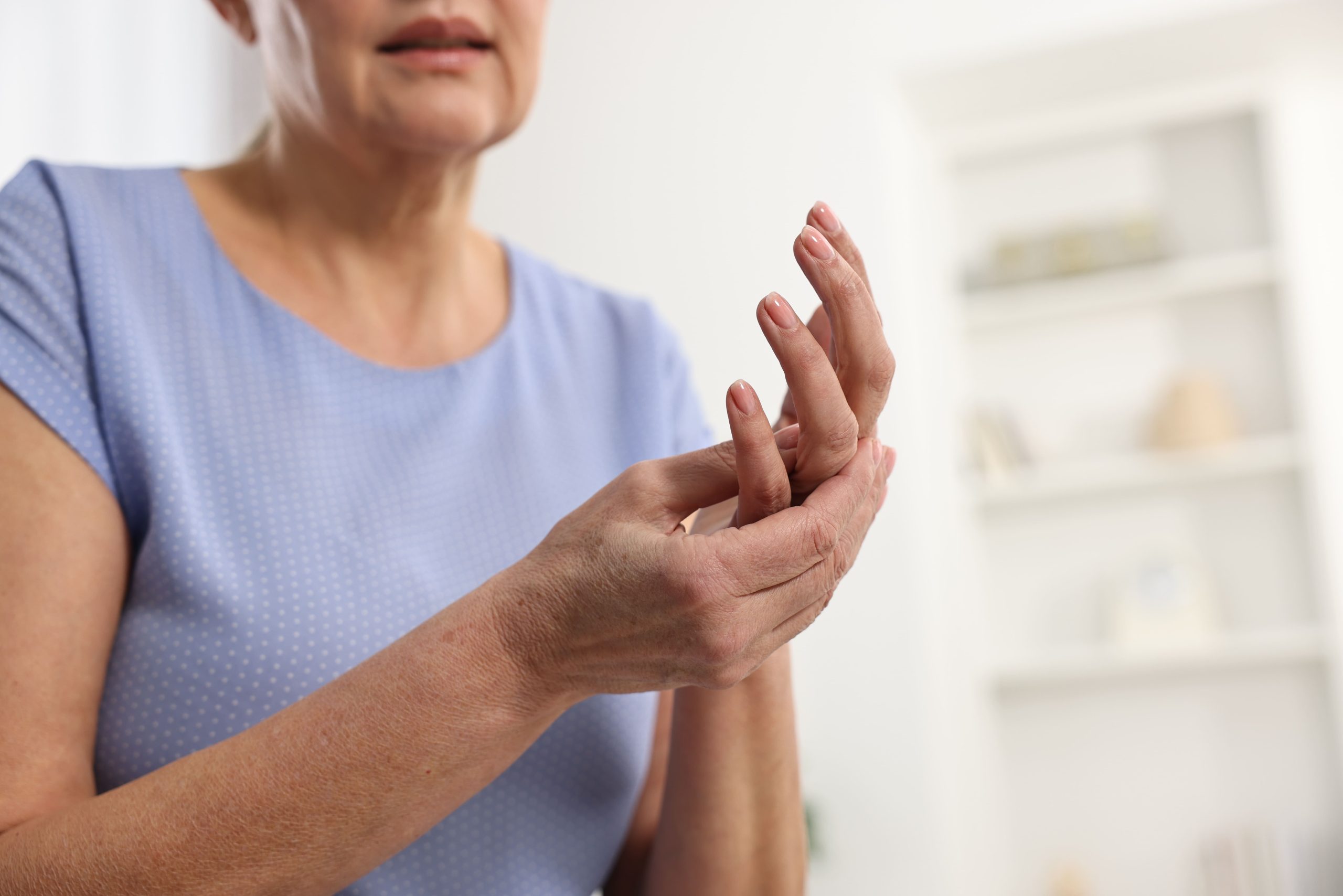
拇指根部的腕掌关节在日常活动中被频繁使用,例如捏、抓和握持物体,因此更容易随着时间推移而磨损。当该关节发生关节炎时,打开罐子、转动钥匙或写字等任务可能会变得疼痛且困难。
拇指基底关节关节炎发生在缓冲关节的软骨逐渐磨损,导致骨骼之间摩擦增加时。症状可能随时间加重,包括疼痛、僵硬和关节形态改变,该病在女性中更为常见,尤其是绝经后。
识别症状
拇指基底关节关节炎通常始于拇指根部轻微的、与活动相关的疼痛,尤其是在捏或抓握时。随着病情进展,不适感变得更加持续,伴随可见的关节变化和手部功能下降。
- 疼痛与活动受限:在进行用力任务(如打开罐子或转动门把手)时逐渐出现疼痛,最初休息后可缓解,但后期即使在休息时也可能持续疼痛。
- 肿胀与畸形:拇指根部逐渐突出,掌骨向外移位,随着关节结构变化可能出现锯齿状畸形。
- 无力与关节变化:握力和捏力减弱,晨僵,天气相关疼痛,以及活动时可能出现捻发感(摩擦或咔哒声)。
了解病因
拇指基底关节关节炎由关节解剖结构、累积性机械应力以及改变正常关节稳定性的因素共同引起。随着时间的推移,这些力量超过软骨的修复能力,导致逐渐退化。
- 关节结构与负荷:腕掌关节的马鞍形结构允许多方向运动,但将高力集中在较小的表面积上,尤其是在捏握时。
- 重复性应力与衰老:日常手部使用产生的力量在数十年间累积,最终超过软骨有限的修复能力。
- 损伤与不稳定:既往创伤或韧带松弛改变关节力学,增加异常应力并加速软骨破坏。
诊断评估
拇指基底关节关节炎的诊断依赖于临床检查和影像学检查相结合,以确认关节受累情况并评估严重程度。仔细评估也有助于将其与其他具有类似症状的疾病区分开来。
- 体格检查:评估拇指姿势、畸形和局部压痛,通过研磨试验再现腕掌关节的疼痛或捻发感。
- 稳定性测试:对掌骨基部施加应力以评估韧带完整性并检测关节过度活动。
- 影像学检查与分期:X光可确诊并帮助使用Eaton-Littler分期系统对严重程度进行分类。然而,治疗决策通常以症状严重程度和功能障碍为指导,而非仅依据影像学分期。
- 鉴别诊断:系统评估以排除诸如De Quervain腱鞘炎、STT关节炎、扳机指和腕管综合征等疾病。
非手术治疗方法
拇指基底关节关节炎的初始治疗侧重于活动调整、夹板固定和抗炎措施。避免诱发活动可使急性炎症消退,同时维持基本任务所需的功能。
夹板固定与支撑
拇指人字形夹板可稳定腕掌关节,同时允许手指活动,刚性夹板用于急性发作期,较软的支撑用于日常活动。在加重任务期间或夜间佩戴夹板可减少关节应力,根据个人解剖需求定制塑形设计以支持功能。
手部治疗
手部治疗侧重于维持活动度和强化支撑肌肉,同时教授关节保护策略以减少日常劳损。热疗、石蜡浴和超声波等物理疗法可能提供额外的症状缓解,但其独立疗效尚不确定。
药物治疗
口服或局部外用的抗炎药物有助于减轻发作期间的疼痛和肿胀。向腕掌关节注射皮质类固醇可提供暂时缓解并辅助诊断,但不能阻止疾病进展。
手术治疗选择
对于经过适当筛选的患者,手术干预可提供有意义的疼痛缓解和功能改善。多种手术方法可治疗拇指基底关节关节炎,每种方法都有特定的适应症、优势和恢复要求。您的外科医生可根据您的具体解剖结构、活动需求和整体健康状况推荐合适的手术方案。
大多角骨切除伴韧带重建
这种常见的手术涉及完全切除患关节炎的大多角骨。其目的是解决疼痛性的骨与骨接触。使用部分桡侧腕屈肌腱重建支撑拇指掌骨基部的韧带,剩余的肌腱可用于填充切除骨骼后留下的空隙。
该手术旨在减轻疼痛,同时保持功能性拇指活动。恢复需要数月的保护性活动和手部治疗。握力在第一年内逐渐改善。
悬吊成形术技术
大多角骨切除术的各种改良方法使用不同的材料或技术来填充大多角骨切除后留下的空隙并悬吊拇指掌骨。一些外科医生使用肌腱组织填塞,而另一些则采用缝线悬吊技术或合成植入物来支撑拇指掌骨。
腕掌关节融合术
将腕掌关节融合在功能位可阻止关节炎关节的活动,旨在缓解疼痛。该手术适用于体力需求高、优先考虑力量而非活动度的年轻患者。邻近关节可部分代偿腕掌关节活动度的丧失,但仍存在一定的功能限制。
关节置换术
腕掌关节假体置换旨在消除关节炎表面的同时保留活动度。早期植入物设计失败率较高,但新型设计的耐久性有所改善。患者选择是一个重要的考量因素。与需要频繁用手活动的患者相比,该手术通常更适合活动量较低的人群。
我们的手外科医生建议
手术干预的时机取决于功能障碍程度,而非仅凭X光表现。一些影像学显示严重关节炎的患者通过保守治疗仍能维持可接受的功能。而另一些中度改变的患者则可能经历显著的功能障碍。决定是否进行手术应反映症状对您日常活动、工作需求和生活质量的影响——而不仅仅是影像学上显示的疾病分期。
恢复与康复
术后康复遵循结构化的进程:
- 初期固定保护愈合结构数周
- 一旦早期愈合允许,开始引导性活动练习,逐步过渡到强化活动
- 完全恢复通常需要数月时间,握力在一年后仍可能持续改善
手部治疗在优化手术效果方面发挥着重要作用。治疗师指导运动进程、制作保护性夹板,并在恢复期间教授活动调整方法。坚持治疗与更好的功能结果相关。
恢复活动逐步进行。轻度日常任务在术后数周内即可恢复。重抓握和负重活动需要数月的愈合才能重新开始。
与拇指关节炎共存
无论处于哪个治疗阶段,适应性策略均可减少日常挑战:
- 加粗手柄用于笔、餐具和工具,将抓握力分散到更大面积
- 电动开罐器和杠杆式门把手消除高力捏握需求
- 钥匙助力器在操作锁具时增加杠杆作用
- 人体工学剪刀将剪切力从拇指转移到手掌
- 语音激活设备减少对小物件操作的需求
何时寻求专业帮助
- 拇指根部疼痛持续数周以上
- 拇指根部出现可见肿胀或畸形
- 捏、抓或握持物体困难
- 因拇指无力或疼痛而掉落物品
- 拇指症状影响工作表现或日常活动
- 既往拇指损伤后逐渐出现疼痛
常见问题
拇指基底关节关节炎进展有多快?
进展速度因人而异,有些人数年保持稳定,而另一些人则下降较快。关节稳定性、活动水平和组织质量等因素影响变化的速度。
患有腕掌关节炎还能继续打高尔夫或园艺等活动吗?
许多人通过调整活动方式以减少关节应力,仍能继续从事这些活动。使用适应性设备、夹板和节奏策略有助于有效管理症状。
手术能完全恢复正常的拇指功能吗?
手术通常有助于减轻疼痛并常能改善功能,但不能保证完全恢复到关节炎前的正常状态。大多数人能够获得足以满足日常活动和工作需求的功能。
拇指关节炎会遗传吗?
遗传因素可能通过影响关节结构和软骨耐久性而增加易感性。然而,关节炎的发生也取决于活动、负荷和既往损伤。
可的松注射能缓解多久?
皮质类固醇注射通常提供持续数周至数月的暂时缓解。其效果可能随时间减弱,且使用通常受限以避免组织相关副作用。
下一步
早期采用夹板固定、活动调整和手部治疗干预通常可维持功能性使用多年。当保守措施不再足够时,手术选择——最常见的是大多角骨切除伴韧带重建——旨在提供显著的疼痛缓解。手术时机应基于功能障碍,而非仅凭X光发现。
如果您正在经历拇指根部的持续性疼痛,手外科医生可以评估您的症状,并讨论是否需要进一步评估。

Understanding the Causes
Thumb basal joint arthritis arises from a combination of joint anatomy, cumulative mechanical stress, and factors that alter normal joint stability. Over time, these forces exceed the cartilage’s ability to repair, leading to gradual degeneration.
- Joint structure and load: The CMC joint’s saddle shape allows multi-directional motion but concentrates high forces on a small surface area, especially during pinching.
- Repetitive stress and ageing: Everyday hand use generates forces that accumulate over decades, eventually overwhelming the cartilage’s limited capacity for repair.
- Injury and instability: Prior trauma or ligament laxity alters joint mechanics, increasing abnormal stress and accelerating cartilage breakdown.
Diagnostic Evaluation
Diagnosis of thumb basal joint arthritis relies on a combination of clinical examination and imaging to confirm joint involvement and assess severity. Careful evaluation also helps distinguish it from other conditions with similar symptoms.
- Physical examination: Assessment of thumb posture, deformity, and localised tenderness, with the grind test reproducing pain or crepitus at the CMC joint.
- Stability testing: Application of stress to the metacarpal base to evaluate ligament integrity and detect excessive joint movement.
- Imaging and staging: X-rays confirm the diagnosis and can help classify severity using the Eaton-Littler staging system. However, treatment decisions are typically guided by the severity of symptoms and functional impairment rather than radiographic stage alone.
- Differential diagnosis: Systematic evaluation to rule out conditions such as De Quervain’s tenosynovitis, STT arthritis, trigger thumb, and carpal tunnel syndrome.
Non-Surgical Treatment Approaches
Initial treatment for thumb basal joint arthritis focuses on activity modification, splinting, and anti-inflammatory measures. Avoiding provocative activities allows acute inflammation to settle whilst maintaining function for essential tasks.
Splinting and Support
Thumb spica splints stabilise the CMC joint while allowing finger movement, with rigid options used for acute flares and softer supports for daily activities. Wearing splints during aggravating tasks or at night reduces joint stress, with custom-moulded designs tailored to individual anatomical needs to support function.
Hand Therapy
Hand therapy focuses on maintaining mobility and strengthening supportive muscles while teaching joint protection strategies to reduce daily strain. Modalities such as heat, paraffin wax, and ultrasound may provide additional symptom relief, though their standalone benefit is uncertain.
Medications
Anti-inflammatory medications, taken orally or applied topically, help reduce pain and swelling during flare-ups. Corticosteroid injections into the CMC joint can provide temporary relief and aid diagnosis, though they do not stop disease progression.
Surgical Treatment Options
Surgical intervention may offer meaningful pain relief and functional improvement in appropriately selected patients. Several procedures address thumb basal joint arthritis, each with specific indications, advantages, and recovery requirements. Your surgeon can recommend an appropriate procedure based on your specific anatomy, activity demands, and overall health status.
Trapeziectomy with Ligament Reconstruction
This commonly performed procedure involves removing the arthritic trapezium bone entirely. This aims to address the painful bone-on-bone contact. A portion of the flexor carpi radialis (FCR) tendon is used to reconstruct the ligament supporting the thumb metacarpal base, and the remaining tendon may be used to fill the space left by the removed bone.
This procedure is designed to reduce pain whilst maintaining functional thumb motion. Recovery requires several months of protected movement and hand therapy. Grip strength gradually improves over the first year.
Suspensionplasty Techniques
Various modifications of trapeziectomy use different materials or techniques to fill the space left after trapezium removal and suspend the thumb metacarpal. Some surgeons use tendon tissue interposition, whilst others employ suture suspension techniques or synthetic implants to support the thumb metacarpal.
CMC Joint Arthrodesis (Fusion)
Fusing the CMC joint in a functional position prevents motion at the arthritic joint, which aims to alleviate pain. This procedure suits younger patients with high physical demands who prioritise strength over mobility. The adjacent joints compensate partially for lost CMC motion, though some functional limitation persists.
Joint Replacement
Prosthetic replacement of the CMC joint attempts to preserve motion whilst eliminating arthritic surfaces. Early implant designs had high failure rates, but newer designs show improved durability. Patient selection is an important consideration. The procedure is typically more suitable for lower-demand individuals compared to those requiring heavy hand use.
What Our Hand Surgeon Says
The timing of surgical intervention depends on functional impairment rather than X-ray appearance alone. Some individuals with severe radiographic arthritis maintain acceptable function with conservative measures. Others with moderate changes experience significant disability. The decision to proceed with surgery should reflect how symptoms affect your daily activities, work requirements, and quality of life—not simply the stage of disease visible on imaging.
Recovery and Rehabilitation
Post-surgical rehabilitation follows a structured progression:
- Initial immobilisation protects healing structures for several weeks
- Guided motion exercises begin once early healing allows, gradually progressing to strengthening activities
- Full recovery typically requires several months, with continued improvement in grip strength possible beyond one year
Hand therapy plays an important role in optimising surgical outcomes. Therapists guide exercise progression, fabricate protective splints, and teach activity modification during recovery. Consistent therapy attendance correlates with better functional outcomes.
Return to activities proceeds incrementally. Light daily tasks resume within weeks of surgery. Heavy gripping and loading activities require several months of healing before reintroduction.
Living with Thumb Arthritis
Adaptive strategies reduce daily challenges regardless of treatment stage:
- Built-up handles on pens, utensils, and tools distribute grip force over larger areas
- Electric jar openers and lever-style doorknobs eliminate high-force pinching requirements
- Key turners extend leverage when operating locks
- Ergonomic scissors transfer cutting force from the thumb to the palm
- Voice-activated devices reduce the need for small-object manipulation
When to Seek Professional Help
- Pain at the thumb base persists beyond several weeks
- Visible swelling or deformity at the base of the thumb
- Difficulty with pinching, gripping, or holding objects
- Dropping items due to thumb weakness or pain
- Thumb symptoms affecting work performance or daily activities
- Previous thumb injury followed by gradual pain development
Commonly Asked Questions
How quickly does thumb basal joint arthritis progress?
Progression varies widely, with some individuals remaining stable for years while others decline more quickly. Factors such as joint stability, activity level, and tissue quality influence the rate of change.
Can I continue activities like golf or gardening with CMC arthritis?
Many people continue activities with modifications that reduce joint stress. Using adaptive equipment, splints, and pacing strategies helps manage symptoms effectively.
Will surgery completely restore normal thumb function?
Surgery generally helps reduce pain and often improves function, but full restoration to pre-arthritis normal is not guaranteed. Most individuals achieve a function sufficient for daily activities and work.
Is thumb arthritis hereditary?
Genetic factors can increase susceptibility by influencing joint structure and cartilage durability. However, arthritis development also depends on activity, loading, and prior injury.
How long do cortisone injections provide relief?
Corticosteroid injections typically provide temporary relief lasting weeks to months. Their effect may diminish over time, and use is usually limited to avoid tissue-related side effects.
Next Steps
Early intervention with splinting, activity modification, and hand therapy often preserves functional use for years. When conservative measures are no longer sufficient, surgical options—most commonly trapeziectomy with ligament reconstruction—are designed to provide significant pain relief. Surgical timing should be based on functional impairment, not X-ray findings alone.
If you are experiencing persistent pain at the base of your thumb, a hand surgeon can assess your symptoms and discuss whether further evaluation is appropriate.
Don't Let Hand Pain Affect Your Life
Restore Function and Improve Your Quality of Life
Our clinic provides a comprehensive, one-stop service for diagnosis and treatment.
Make An Enquiry